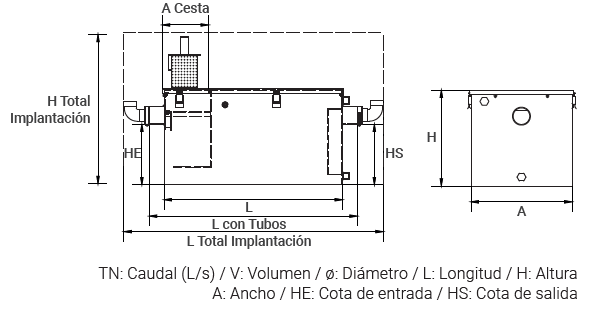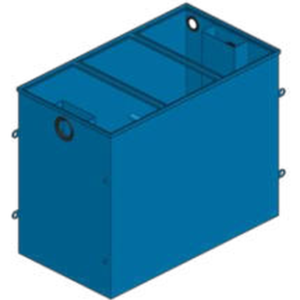
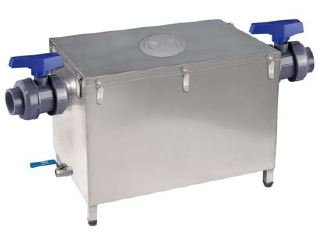
Stainless steel grease separators

Price range: €1.283,33 through €2.883,33 taxes not included

Stainless steel grease separators are equipment that facilitate the separation and removal of fats, oils, and greases of vegetable and animal origin generated in a kitchen, thereby allowing the highest standards of maintenance and quality to be upheld. Stainless steel is the most suitable material when it comes to keeping a kitchen free from potential contamination.

SKU: N/A Category:

Description

Grease separators are units designed to facilitate the separation and removal of vegetable and animal fats generated in a kitchen, preventing them from entering the downstream drainage system, thereby avoiding blockages and foul odours. Water is separated from grease due to density differences. This is why Grease Separators are designed and manufactured to ensure grit removal, separation, and fat storage functions as a pre-treatment for effluents before discharge into the sewerage networks.
A Grease Separator is characterised by having two compartments:
The grit trap, which allows for the sedimentation of sludge and solid matter. This can be delimited by a baffle or an
inclined base.
The separation chamber (Separator), designed to retain fats and oils, which have a lower density than water.

Stainless steel grease separators


They are valid for both a new build installation and for possible placement and connection under the sink in case of renovation.

It is possible to combine INZA ISGI grease separators with the InzaBio solution to enhance the separators’ performance. This enzymatic solution facilitates grease digestion, preventing clogging and odour problems. There is the option to connect a pump for automatic dosing.

The discharge pipe to the grease separator must be fitted with
a ventilation stack. Commissioning involves performing the
following operations:
Fill with clear water until it overflows through the outlet pipe. This
operation must also be performed after each emptying.
Check the lid seals to prevent any odour nuisance.

Grease separators must be inspected, emptied, and cleaned
regularly. The frequency of inspection, emptying, and cleaning should
be determined based on the grease and sludge storage capacity of the
separator, and in accordance with functional experience.
Unless otherwise specified, separators should be emptied,
cleaned, and refilled with clean water at least once a month, although
every two weeks is preferable, as specified by standard UNE-EN 1825-2.
The grease detection alarm option can assist in
operation, alerting maintenance personnel that the maximum grease
retention for the equipment has been reached.
Commissioning
Grease separators must be installed in accordance with the installation
recommendations provided in the Generalities chapter.
Pipework connected to grease separators must be adequately ventilated.
The discharge pipe to the separator must be fitted with
a ventilation stack. Commissioning involves performing the
following operations:
Fill with clear water until it overflows through the outlet pipe. This
operation must also be performed after each emptying.
Check the lid seals to prevent any odour nuisance.


Maintenance of a grease separator
During this maintenance operation, the following must be done:
Clean the internal components (baffles, partitions, etc.).
Check the coating (coated steel range) and, in general, the interior of the equipment.
Check and clean the level probe, in accordance with the maintenance manual for this device.

Additional information

Caudal de tratamiento del SG

0.5L/s, 1L/s, 2L/s, 3L/s, 4L/s, 5 L/s

Reviews

There are no reviews yet.

Only logged in customers who have purchased this product may leave a review.

Seleccionar