
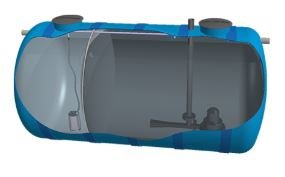
Wastewater treatment plant
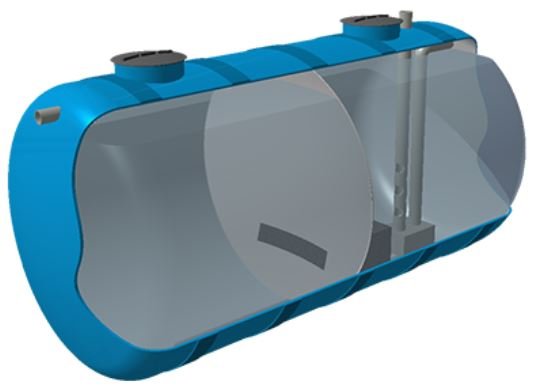
Home » Water Treatment »A compact wastewater treatment plant (WWTP) carries out a complete biological treatment of domestic wastewater (primary + secondary), producing an effluent suitable for discharge into a public watercourse in compliance with the legal limits (RD 509/1996 and Directive 91/271/EEC).
Unlike a septic tank, the treatment plant does remove the organic load required for discharge. At Inza we offer biological filter treatment plants (a combination of anaerobic and aerobic processes) and sequencing batch reactor (SBR) plants, sized by population equivalent and compliant with standard EN 12566-3 (up to 50 PE).
Supply: delivery time to be confirmed, depending on the size and component stock. Transport included in the price, excluding the unloading means at destination; for capacities over 5,000 L, please ask.
Questions or enquiries?
Phone: +34 91 127 90 05
WhatsApp: +34 91 127 90 05
Email: info@inzainox.com
Showing all 3 results
-
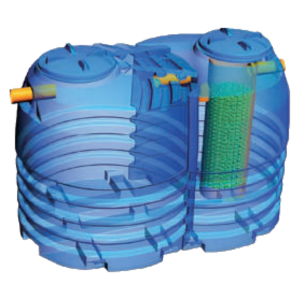
Compact polyethylene septic tanks with biological filter
Price range: €800,00 through €2.500,00 taxes not included Select options This product has multiple variants. The options may be chosen on the product page -
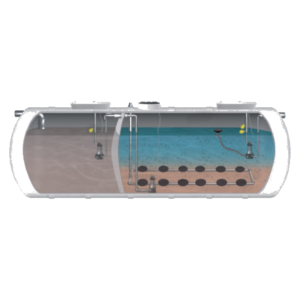
Compact SBR wastewater treatment plants
Price range: €10.500,00 through €16.800,00 taxes not included Select options This product has multiple variants. The options may be chosen on the product page -
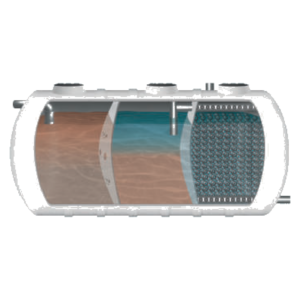
GRP septic tanks with biological filter
Price range: €1.100,00 through €11.400,00 taxes not included Select options This product has multiple variants. The options may be chosen on the product page

EXPERIENCE
We advise you before, during and after your purchase for complete satisfaction.

DESIGN
We can design and manufacture the solution you need. Tell us about your project!

SHIPPING IN 24-72h
Shipping throughout Europe. Delivery in 24-72h in mainland Spain (working days, Monday to Friday).

BUY WITH CONFIDENCE
100% secure payments. You can pay by credit card or by bank transfer with full guarantee.
We answer your questions about treatment plants
Can I discharge the water from a treatment plant into a river or stream?
Yes. A treatment plant carries out a complete biological treatment and produces an effluent that meets the discharge limits (RD 509/1996 / Directive 91/271). Discharge into a watercourse always requires authorisation from the relevant river basin authority.
What is the difference between a septic tank and a treatment plant?
The septic tank only performs a primary treatment (not enough for discharge). The treatment plant adds a secondary biological treatment and produces water suitable for discharge into a public watercourse.
Which technology should I choose, biological filter or SBR?
The biological filter is a passive treatment, with no electricity consumption and low maintenance, ideal for homes and small communities. The SBR offers a higher purification performance and better discharge quality, but requires an electricity supply and more technical maintenance. We help you choose according to your case.
Which standards do the treatment plants meet?
They comply with standard EN 12566-3 (prefabricated treatment plants up to 50 PE) and the discharge limits of RD 509/1996 and Directive 91/271/EEC.
What capacity or size of treatment plant do I need?
Treatment plants are sized directly by population equivalents (PE): 1 PE equals the wastewater load of one person per day (about 200 litres/day and 60 g of BOD₅). It is enough to count the regular occupants of the home or facility; in a dwelling, the usual reference is number of bedrooms × 1.5–2 to cover peaks (a 4-bedroom house ≈ 6 PE).
Our treatment plants cover from 4 to 60 PE. Choose the model whose PE number equals or exceeds your inhabitants; it is preferable to oversize slightly than to fall short, because an overloaded plant loses performance and worsens the quality of the outlet water. For non-residential uses (hotels, restaurants, campsites, warehouses) the calculation is made by places, diners or employees according to official tables: ask us and we will size the solution for you.
How is a treatment plant installed?
Installation is similar to that of a buried tank, with some requirements specific to the treatment process (always follow the unit’s manual and the local regulations):
- Location: accessible for maintenance and for the tanker truck, respecting the minimum distances to wells, catchments, watercourses and boundaries.
- Base and anchoring: a levelled compacted sand bed; with a high water table or clay ground, a concrete slab and strap anchoring to prevent flotation.
- Backfill: backfill with sand around it while filling with water, in layers, compacting in lifts.
- Connections: inlet and outlet with the correct slope and levels, and a vent pipe for the gases.
- Electricity supply: the SBR models (and those with a blower or pumps) need an electrical connection and a control panel near the unit. Biological filter plants work passively and generally do not require electricity.
- Commissioning: a start-up of the biological process is advisable (seeding and maturing of the biomass) to reach the nominal purification performance.
The discharge point of the treated water (to a watercourse, filter trench or infiltration) must have the authorisation of the river basin authority. We help you with the sizing and the requirements of your installation.
Yes. A treatment plant carries out a complete biological treatment and produces an effluent that meets the discharge limits (RD 509/1996 / Directive 91/271). Discharge into a watercourse always requires authorisation from the relevant river basin authority.
The septic tank only performs a primary treatment (not enough for discharge). The treatment plant adds a secondary biological treatment and produces water suitable for discharge into a public watercourse.
The biological filter is a passive treatment, with no electricity consumption and low maintenance, ideal for homes and small communities. The SBR offers a higher purification performance and better discharge quality, but requires an electricity supply and more technical maintenance. We help you choose according to your case.
They comply with standard EN 12566-3 (prefabricated treatment plants up to 50 PE) and the discharge limits of RD 509/1996 and Directive 91/271/EEC.
Treatment plants are sized directly by population equivalents (PE): 1 PE equals the wastewater load of one person per day (about 200 litres/day and 60 g of BOD₅). It is enough to count the regular occupants of the home or facility; in a dwelling, the usual reference is number of bedrooms × 1.5–2 to cover peaks (a 4-bedroom house ≈ 6 PE).
Our treatment plants cover from 4 to 60 PE. Choose the model whose PE number equals or exceeds your inhabitants; it is preferable to oversize slightly than to fall short, because an overloaded plant loses performance and worsens the quality of the outlet water. For non-residential uses (hotels, restaurants, campsites, warehouses) the calculation is made by places, diners or employees according to official tables: ask us and we will size the solution for you.
Installation is similar to that of a buried tank, with some requirements specific to the treatment process (always follow the unit’s manual and the local regulations):
- Location: accessible for maintenance and for the tanker truck, respecting the minimum distances to wells, catchments, watercourses and boundaries.
- Base and anchoring: a levelled compacted sand bed; with a high water table or clay ground, a concrete slab and strap anchoring to prevent flotation.
- Backfill: backfill with sand around it while filling with water, in layers, compacting in lifts.
- Connections: inlet and outlet with the correct slope and levels, and a vent pipe for the gases.
- Electricity supply: the SBR models (and those with a blower or pumps) need an electrical connection and a control panel near the unit. Biological filter plants work passively and generally do not require electricity.
- Commissioning: a start-up of the biological process is advisable (seeding and maturing of the biomass) to reach the nominal purification performance.
The discharge point of the treated water (to a watercourse, filter trench or infiltration) must have the authorisation of the river basin authority. We help you with the sizing and the requirements of your installation.
How a compact treatment plant works
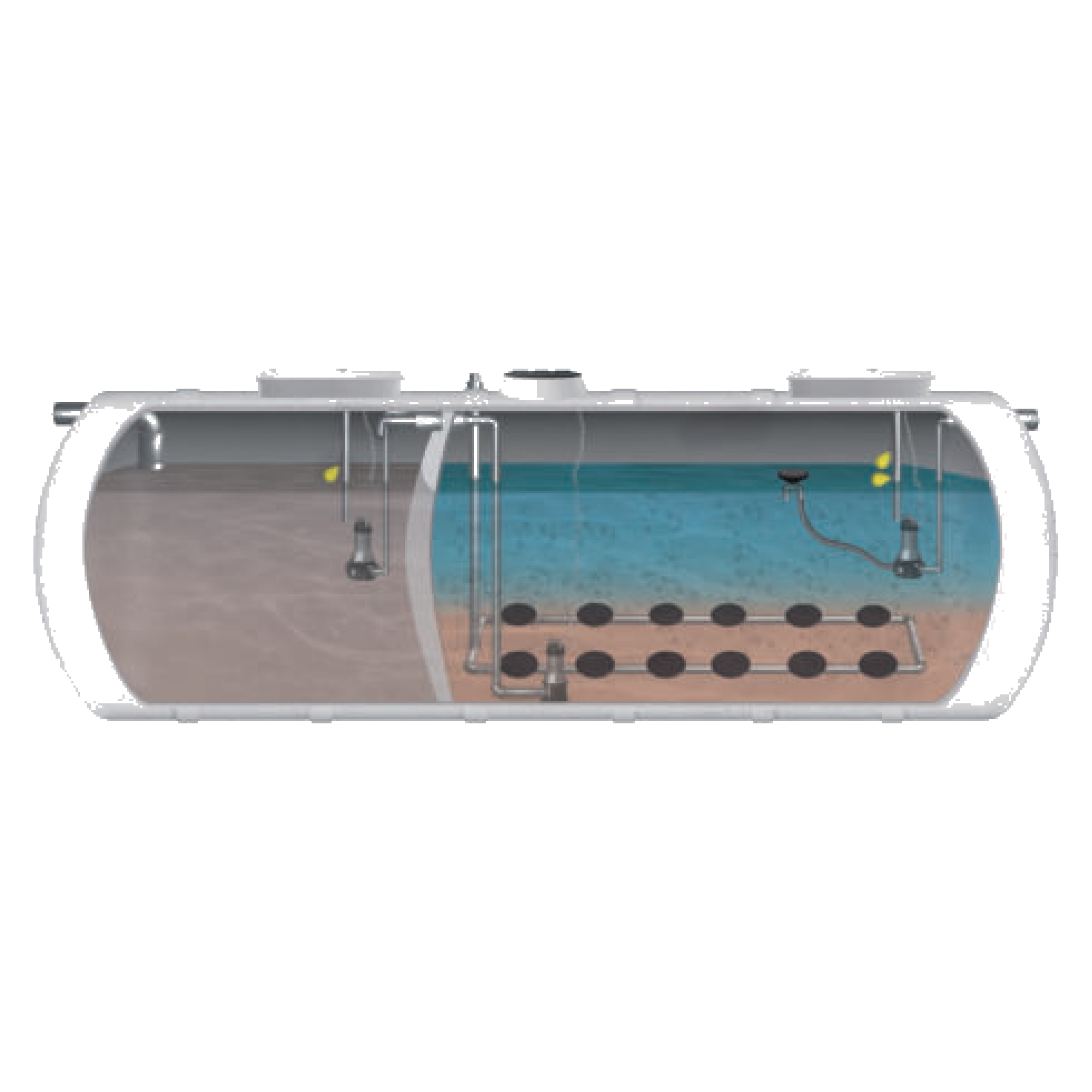
The wastewater first passes through a settling-digestion stage where the solids settle. It then enters the biological (secondary) treatment stage: in biological filter plants, the water passes through a bed where the aerobic biomass degrades the organic matter; in SBR plants, the process is carried out in cycles of loading, reaction (aerobic and anoxic phases), settling and discharge.
Finally, the clarified water is discharged with the quality required for discharge into a watercourse. The excess sludge is removed periodically.
Advantages of compact treatment plants
Advantages
- They produce water suitable for discharge into a public watercourse in compliance with the regulations.
- Total independence from the sewer network: ideal for rural or isolated areas.
- Compact, prefabricated units, with quick installation.
- Sized by population equivalent, with biological filter (passive) or SBR (high performance) options.
To bear in mind
- SBR plants require an electricity supply and more technical maintenance.
- They need periodic inspections and sludge removal by qualified personnel.
Why choose Inza treatment plants?
At Inza we offer compact biological filter treatment plants in polyester and polyethylene, and sequencing batch reactor (SBR) treatment plants, sized by population equivalent (from 4 to 60 PE). All compliant with standard EN 12566-3 and with the discharge limits (RD 509/1996).
We advise you on choosing the technology (biological filter or SBR) and the size according to the number of users and the discharge conditions of your plot.
Important notice: the information on this page is indicative and does not replace technical advice or the applicable regulations. Before installing any wastewater treatment system you must consult your town council, the regional government and the relevant river basin authority (Confederación Hidrográfica), since the type of treatment required, the minimum distances, the discharge authorisation and other conditions vary according to the location and each specific case. Inza advises you on the most suitable equipment, but obtaining the permits and authorisations is the responsibility of the owner of the installation.
Other products that may interest you
Industrial stainless steel drains
Need help? Fill in our contact form
Inza Inox S.L.
-
info@inzainox.com
-
+34 91 127 90 05
- C/ Mª Auxiladora 35. CP. 28221 Majadahonda