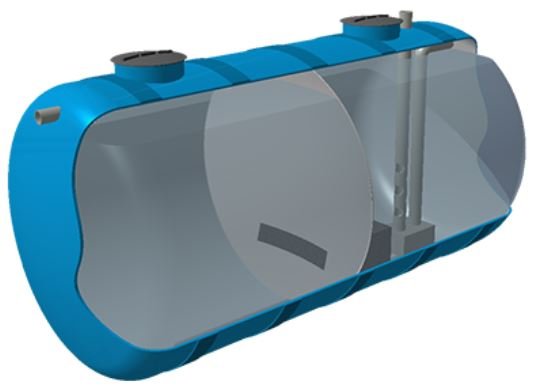
Fosas sépticas estancas

Watertight septic tanks

Home » Water Treatment » Fosas sépticas estancas

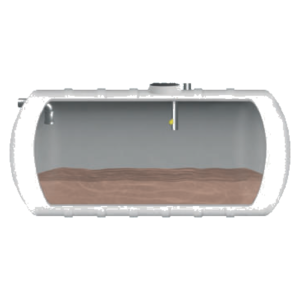
A watertight septic tank is a completely sealed tank that collects and stores the wastewater of a home or facility when it cannot be discharged into the ground or connected to the sewer network. Unlike a conventional septic tank, it does not infiltrate or discharge any water into the environment: the contents are retained inside until an authorised operator empties it.

They are the ideal solution for rural or isolated areas without sewerage, plots with a high water table or land where regulations do not allow discharge, as well as for portable toilets, site cabins and sensitive locations (water catchments, protected areas). At Inza we manufacture them in glass-reinforced polyester (GRP) and high-density polyethylene (HDPE), in capacities from 500 to 50,000 litres.

Supply: lead time to be confirmed, depending on the size and component stock. Shipping included in the price, excluding unloading at destination. For capacities over 5,000 L, please ask about transport conditions.

Showing all 2 results

EXPERIENCE

We advise you before, during and after your purchase for complete satisfaction.

DESIGN

We can design and manufacture the solution you need. Tell us about your project!

SHIPPING IN 24-72h

Shipping throughout Europe. Delivery in 24-72h in mainland Spain (working days, Monday to Friday).

BUY WITH CONFIDENCE

100% secure payments. You can pay by credit card or by bank transfer with full guarantee.
Answers to your questions about watertight septic tanks

A conventional septic tank carries out a pretreatment (settling and anaerobic digestion) and discharges the water into the ground by infiltration. A watertight septic tank is completely sealed: it does not infiltrate or discharge anything into the environment, but stores the wastewater until it is removed by an authorised operator. It is mandatory where regulations do not allow discharge into the ground.

It is required on plots without a connection to the sewer network where discharge into the ground is not authorised: areas with a high water table, low-permeability or clay soils, proximity to water catchments, protected natural areas and, in general, wherever the water authority or the regional government determines.

Emptying depends on the tank volume and the number of users. It must always be carried out by an authorised waste manager when it reaches its maximum capacity. It is advisable to maintain the ventilation pipe and check the level periodically; many models accept an optional level indicator.

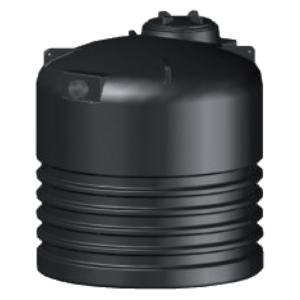
We manufacture them in glass-reinforced polyester (GRP) and in rotomoulded high-density polyethylene: lightweight, corrosion-resistant materials with maximum watertightness. They incorporate reinforcements to withstand ground pressure, a Ø 620 mm threaded access cover and PVC connections.

How watertight septic tanks work

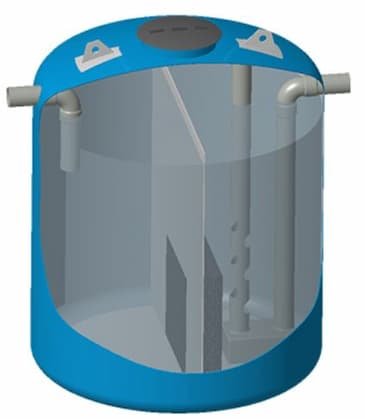
The wastewater from the home or facility enters through the inlet pipe and accumulates inside the tank, which is completely sealed. As there is no outlet or infiltration, the water remains stored until the maximum capacity of the unit is reached.

When the tank is full, it is emptied through the top access by a tanker truck operated by an authorised waste manager. For correct and safe operation it is essential to install a ventilation pipe to release the gases generated inside. The models can be fitted with a level indicator to warn before saturation and, in the polyester versions, with sludge removal via a submerged pipe and quick connection.

Advantages and disadvantages of watertight septic tanks

Advantages

  • Total independence from the sewer network, ideal for rural or isolated areas.
  • Maximum protection of the environment: being sealed, they do not contaminate the soil or groundwater.
  • Legal solution where discharge into the ground is not permitted.
  • Simple and quick installation; compact, lightweight and prefabricated units.
  • Durable, corrosion-resistant materials (GRP and HDPE) with a long service life.

Disadvantages and considerations

  • They require periodic emptying by an authorised operator, with a recurring maintenance cost.
  • They do not treat the water: they only store it, so the volume to be removed is the total generated.
  • The capacity must be properly sized according to consumption to avoid overly frequent emptying.
  • They need a ventilation pipe and suitable access for the tanker truck.

Why choose Inza watertight septic tanks?

At Inza we offer watertight septic tanks in glass-reinforced polyester (GRP) and high-density polyethylene (HDPE), with capacities from 500 to 50,000 litres and vertical and horizontal formats to suit every type of ground. All the units are 100% watertight, with structural reinforcements, a Ø 620 mm threaded access cover and PVC connections.

They meet the technical requirements for autonomous sanitation in Spain (watertightness, ventilation and maintenance access), in line with the Public Hydraulic Domain Regulation, the Technical Building Code and the UNE-EN 12566 standard. We advise you on choosing the model and capacity according to your consumption and the conditions of your plot.

Need help? Fill in our contact form

Seleccionar